
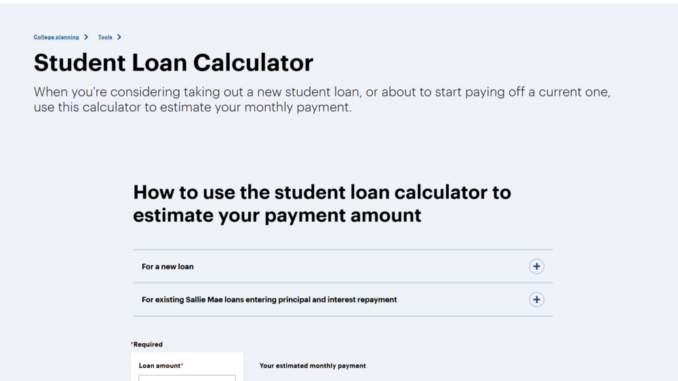
Estimate student loan repayment: Managing your finances after university often starts with one big question: how much will actually come out of your paycheck? In the UK, student loans don’t work like traditional bank debt; they function more like a graduate tax. Because the amount you pay is linked to your salary—not your total debt—learning how to estimate student loan repayment is essential for accurate monthly budgeting.
As we move into the 2026/27 tax year, new thresholds and the introduction of Plan 5 have changed the calculation for thousands of graduates. This guide breaks down the latest figures and formulas to help you plan ahead.
The Golden Rule of UK Student Loans (Estimate student loan repayment)
Unlike a mortgage or a car loan, the size of your student debt doesn’t change your monthly bill. Whether you owe £10,000 or £100,000, your repayment remains exactly the same.
To estimate student loan repayment, you only need two pieces of information:
-
Your Repayment Plan: Determined by when and where you studied.
-
Your Gross Income: Your salary before tax and National Insurance.
2026/27 Repayment Thresholds by Plan
The “threshold” is the amount you can earn before a single penny is deducted. You only pay a percentage of your income above this figure. Here are the active thresholds for the tax year starting April 6, 2026:
| Plan Type | Who is on this plan? | Annual Threshold | Monthly Threshold | Repayment Rate |
| Plan 1 | Northern Irish students; pre-2012 English/Welsh students. | £26,900 | £2,241 | 9% |
| Plan 2 | English/Welsh students who started 2012–2023. | £29,385 | £2,448 | 9% |
| Plan 4 | Scottish students. | £33,795 | £2,816 | 9% |
| Plan 5 | English students who started after Aug 1, 2023. | £25,000 | £2,083 | 9% |
| Postgrad | Master’s and Doctoral loan borrowers. | £21,000 | £1,750 | 6% |
(Estimate student loan repayment) How to Calculate Your Repayment: The Formula
To manually estimate student loan repayment, follow this simple three-step calculation. For this example, let’s assume you are on Plan 2 and earn £35,000 per year.
Step 1: Find your monthly surplus
Subtract the monthly threshold from your monthly gross pay.
-
Monthly Salary: £35,000 / 12 = £2,916
-
Plan 2 Threshold: £2,448
-
Difference: £2,916 – £2,448 = £468
Step 2: Apply the percentage
Multiply that difference by the repayment rate (usually 9%).
-
£468 × 0.09 = £42.12
Step 3: Round down
HMRC rounds down your student loan deduction to the nearest pound.
-
Estimated Monthly Repayment: £42
Estimating Repayments for Multiple Loans
If you have both an undergraduate loan and a Postgraduate loan, your deductions will be higher because they are calculated separately.
Example: You earn £3,000 a month. You have a Plan 2 loan and a Postgrad loan.
Postgrad Calculation: (£3,000 – £1,750) × 6% = £75
Plan 2 Calculation: (£3,000 – £2,448) × 9% = £49
Total Monthly Deduction: £124
Interest Rates in 2026: What You Need to Know
While interest doesn’t change your monthly payment, it does affect how long you’ll be paying. For the 2026/27 academic year, the government has capped the maximum interest rate for Plan 2 and Postgraduate loans at 6%.
For Plan 5 borrowers, interest is locked to the Retail Price Index (RPI) only, meaning your debt shouldn’t grow faster than inflation in real terms.
Important Considerations for 2026 Graduates
1. The Plan 5 Shift
If you are among the first wave of Plan 5 graduates entering repayment in April 2026, be aware that your threshold is lower (£25,000) than older plans. This means you will start paying back sooner, but your loan is scheduled to be written off after 40 years rather than the 30-year window seen on Plan 2.
2. Salary Sacrifices
If you put money into a pension via salary sacrifice, this lowers your “gross” income. This is a common way for UK graduates to effectively estimate student loan repayment at a lower rate while saving for the future.
3. Bonus Payments
If you receive a one-off bonus that pushes your pay above the weekly or monthly threshold for that specific period, a deduction will be taken—even if your total annual income is below the threshold. You can sometimes claim this back at the end of the tax year if your total annual earnings didn’t exceed the limit.
Summary Table: Estimated Monthly Repayments
| Annual Salary | Plan 1 | Plan 2 | Plan 4 | Plan 5 | Postgrad |
| £25,000 | £0 | £0 | £0 | £0 | £20 |
| £30,000 | £23 | £4 | £0 | £37 | £45 |
| £40,000 | £98 | £79 | £46 | £112 | £95 |
| £50,000 | £173 | £154 | £121 | £187 | £145 |
Final Thoughts on Estimate student loan repayment
The best way to estimate student loan repayment is to check your latest payslip and compare it against the thresholds listed above. While the 2026 changes mean some graduates will pay more over their lifetimes, the system remains “income-contingent.“ If your salary drops or you lose your job, your repayments stop automatically, providing a safety net that traditional loans do not offer.
Are you trying to decide if making voluntary extra payments is worth it for your specific plan type?
Be the first to comment